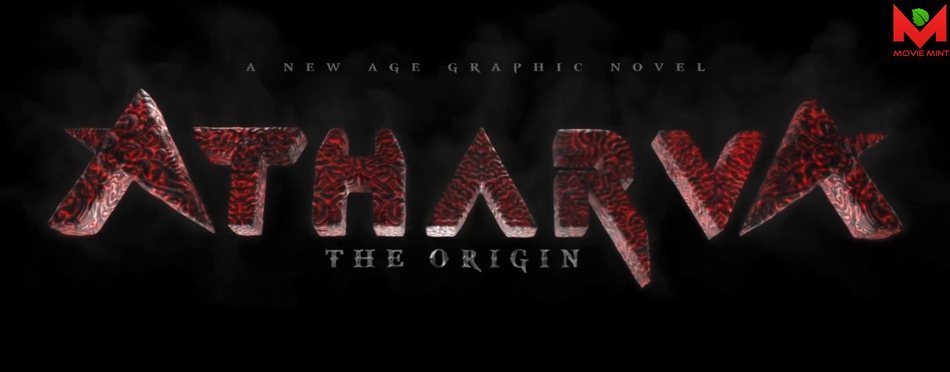
Animation and VFX has always been Shah Rukh Khan's forte. He redefined rules when he made Ra.One, a film high on visual effects. And it seems that now the superstar is all set to achieve another milestone. Shah Rukh Khan will play the title role in a graphic novel,Atharva - The Origin. A trailer of the graphic novel has been released by Virzu Studios and features a CG SRK with ripped muscles and ancient armours. He stands on a patch of rocky mountains in what seems to be the prehistoric age. The story of the novel apparently documents the journey of a prospective King. The novel is an adaptation of Ramesh Tamilmani's graphic novel by the same name. The project, headed by Vel Mohan, has beautiful illustrations by Ramesh Acharya. While there has been no confirmation yet, rumour mills are abuzz with reports that the book might be adapted into a film, in the future.
FRAMES is a three day global convention covering the entire gamut of Media & Entertainment like Films, Broadcast (TV & Radio), Digital Entertainment, Animation, Gaming, Visual Effects, etc. with nearly 2000 Indian and 800 foreign delegates encompassing the entire universe of media and entertainment expected to attend the event.
IAD an artistic extravaganza is conducted every year in many cities across the nation with great Pomp and Show. IAD is a daylong event of workshops, presentations by eminent speakers & showcasing of student creative works. The primary objective is to bring all the creative students & Professionals from all the corners of the state to assemble in one platform and exchange ideas.
Phenakistoscope (1831) A phenakistoscope disc by Eadweard Muybridge (1893).The phenakistoscope was an early animation device. It was invented in 1831 simultaneously by the Belgian Joseph Plateau and the Austrian Simon von Stampfer. It consists of a disk with a series of images, drawn on radii evenly spaced around the center of the disk. Slots are cut out of the disk on the same radii as the drawings, but at a different distance from the center. The device would be placed in front of a mirror and spun. As the phenakistoscope is spun, a viewer would look through the slots at the reflection of the drawings which would only become visible when a slot passes by the viewer's eye. This created the illusion of animation.