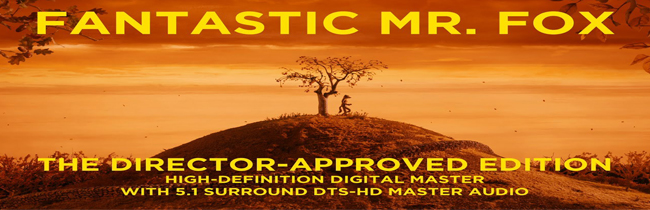
Fantastic ‘Mr. Fox’ - The Criterion Collection Edition
Wes Anderson American stop-motion animated comedy film, Fantastic Mr. Fox, come February 18th, 2014
February 20th, 2014
Wes Anderson American stop-motion animated comedy film, Fantastic Mr. Fox, come February 18th, 2014. It is the first time an animated picture would be slated for a Criterion Collection release since the 1993 release of Akira on laserdisc.
The director approved release includes the film’s digital master in addition to a host of extras, including audio commentary, footage of the actors voicing the characters, an hour long documentary about Dahl, and etc. It is based on the Roald Dahl children's novel of the same name.
Is Kodi Ramakrishna’s next VFX venture Avatharam inspired from a real life incident
Moviemaker Kodi Ramakrishna says his upcoming Telugu fantasy thriller movie Avataram is based upon the real incident in Kerala. The story is about a woman fight against a devil and the graphics are used.
Phenakistoscope (1831) A phenakistoscope disc by Eadweard Muybridge (1893).The phenakistoscope was an early animation device. It was invented in 1831 simultaneously by the Belgian Joseph Plateau and the Austrian Simon von Stampfer. It consists of a disk with a series of images, drawn on radii evenly spaced around the center of the disk. Slots are cut out of the disk on the same radii as the drawings, but at a different distance from the center. The device would be placed in front of a mirror and spun. As the phenakistoscope is spun, a viewer would look through the slots at the reflection of the drawings which would only become visible when a slot passes by the viewer's eye. This created the illusion of animation.