



Have a look at the great work VFX Breakdown of Lost in Space Season 2
175 shots were delivered across 6 episodes, with work ranging from the robots to full CG space environments. 2,250 VFX Shots for season 2.
February 05th, 2020
Cinesite’s team in Montreal led work on season 2 of the popular Netflix series, with our London division contributing some sequences. Production VFX supervisor was Jabbar Raisani and VFX producer Terron Pratt.
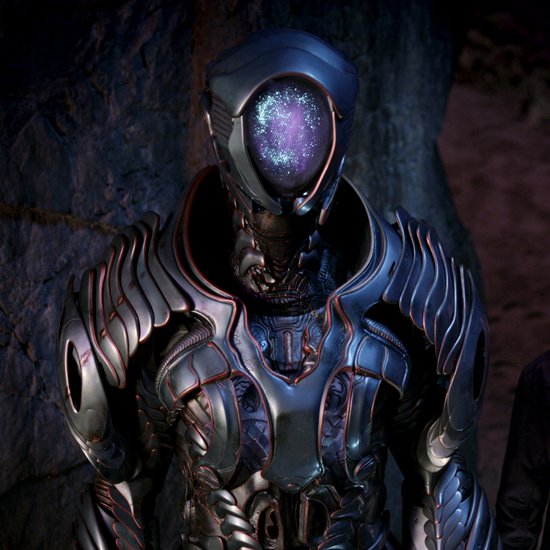
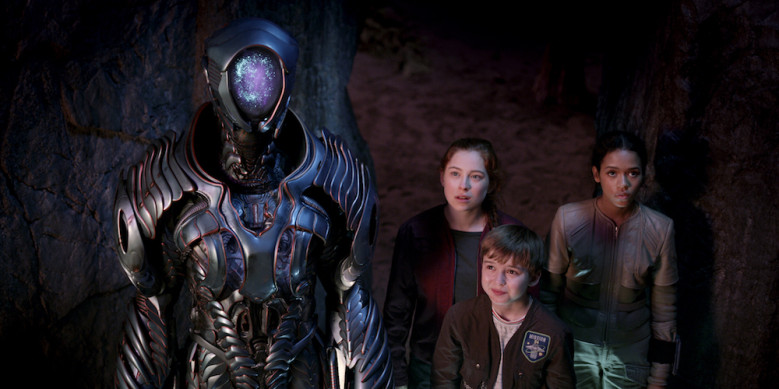
In the second episode, the crew of Jupiter 2 make their way back to the Resolute. Finding it abandoned and partially destroyed, they dock and explore. Scarecrow had been piloting the space station and has been roaming in near solitude until the explorers arrive. A menacing presence, he crawls on his damaged limbs, dragging himself along the Resolute’s long, empty corridors in pursuit of the children.
The first robot, which Will previously befriended, along with the SAR (Second Alien Robot) from the first series, was adapted and re-rigged to create Scarecrow. His flawed surface texture was hand-painted with scratches and gouges, even shivering flakes of metal were added to enhance his scuffed-up patina.
Scarecrow’s red faceplate, like SAR’s, reflects his mind or neural network. His moving, synaptic network has been damaged and his face reflects this by glitching, almost like a broken LED TV, as though his computer brain isn’t working right. He has a beaten-up boxer look, which was achieved using Nuke and applied as a moving texture map in 3D through Gaffer.
Despite his smashed-up, punch-drunk state, it was important that Scarecrow appears dangerous. Initial movement tests included pauses as he drags his defective limbs, but made him appear too weak. Ultimately, a more fluid, determined movement was favored and Scarecrow’s performance was hand-animated to achieve this.
In another sequence, Will attempts to repair the damaged robot, replacing his arm with one from another robot. As he raises the limb, its internal fibers intuitively attach with those in Scarecrow’s forearm. The integration and movement of the snaking wires were all hand-animated.
Full space environments with ships were also created. Early in episode 3, we see the Jupiter 2 docking on the Resolute.
The ships are propelled by gas jets, with finer steering handled by the pilot. Achieving a convincing sense of scale and weight was important; the movement takes place in zero gravity so a careful balance was needed between obeying real physics and achieving the movement the client needed, to work within the narrative context.
From a lighting perspective, there were also challenges for space environments. Audiences are used to seeing space photography which is lit by the Sun. Apart from that, there are few light sources other than light bouncing off the surface of the Earth. In the Resolute docking sequences, the planet they are near is orange, not blue like the Earth, so the light is generally warmer. Again, the lighting teams needed to find a balance between physics and believability to make it work.
Relates News
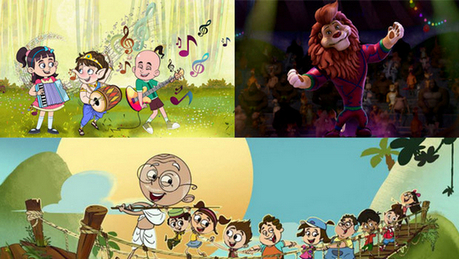
At times of COVID19 Lockdown Animation studios are offering new and exclusive content
At a time when production of new shows and films is on halt due to the coronavirus lockdown in India, there is one segment that is coming up with new and exclusive content
May 07th, 2020 Read more

Digital Art symposium 2019 by ABAI
Digital Art symposium 2019 by ABAI on 13th April
April 12th, 2019 Read more


JOB SEARCH